
Tissue Silk vs Pure Silk Saree: Which One Should You Actually Be Wearing?
There is a question that comes up almost every time a woman is seriously shopping for a saree, not casually browsing, but actively comparing options. The question is this: tissue silk or pure silk? Both sound premium. Both look beautiful in photographs. Both carry a certain weight of tradition. So what actually separates them, and more importantly, which one belongs in your wardrobe?
This is not a question with one right answer. It depends on who you are, where you are going, and what you want the saree to do for you. This guide is going to break all of that down honestly, without making one sound like the obvious winner and the other like a consolation prize. Because the truth is, both fabric categories earn their place, just in different ways and for different women.
First, What Actually Is Tissue Silk?
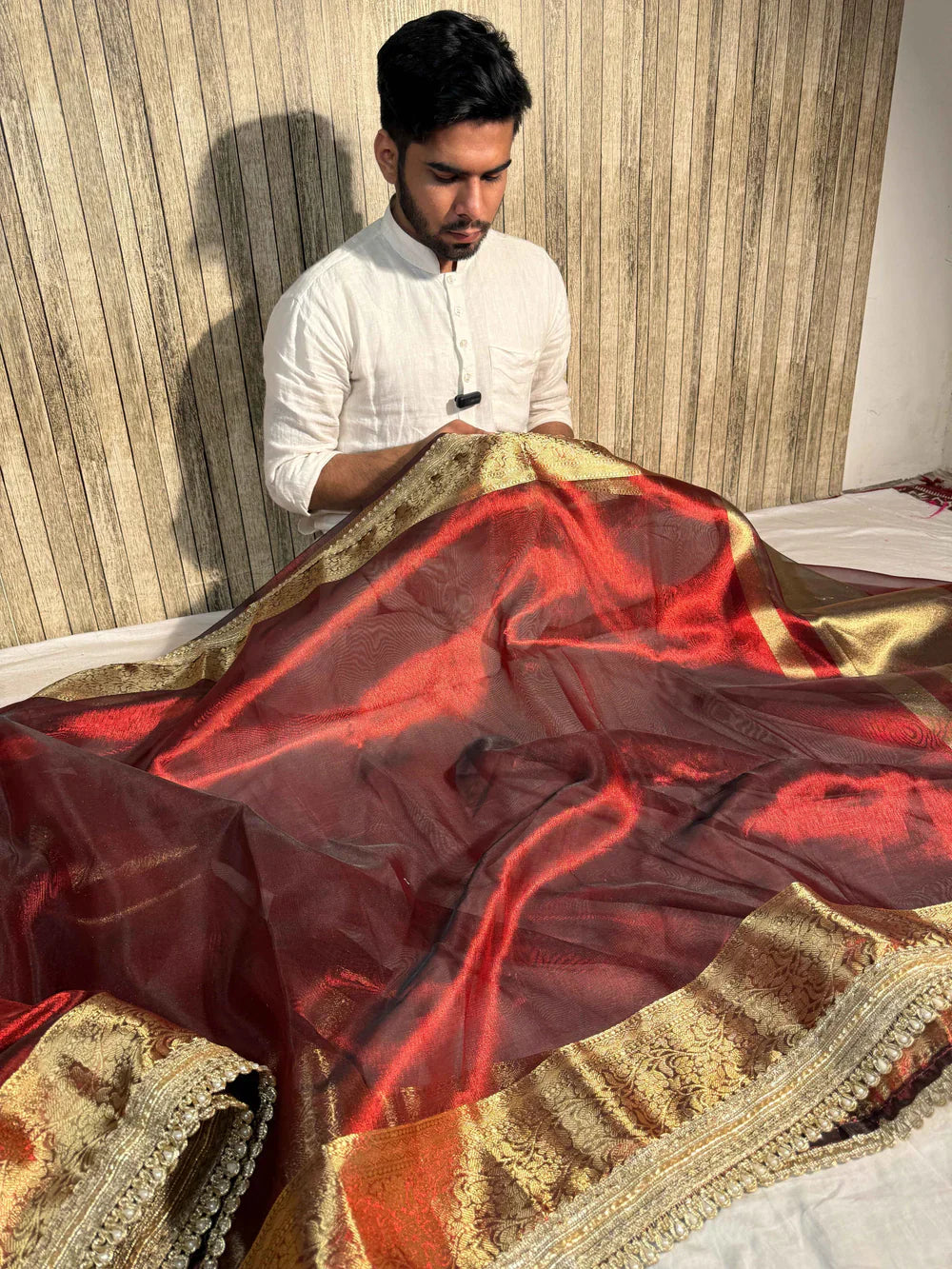
A Tissue silk saree is a woven fabric where silk threads are interlaced with metallic threads, usually gold or silver zari. The result is a fabric that has a distinctive shimmer and a certain stiffness to it, not uncomfortable stiffness, but a structured quality that makes the saree hold its shape beautifully when draped.
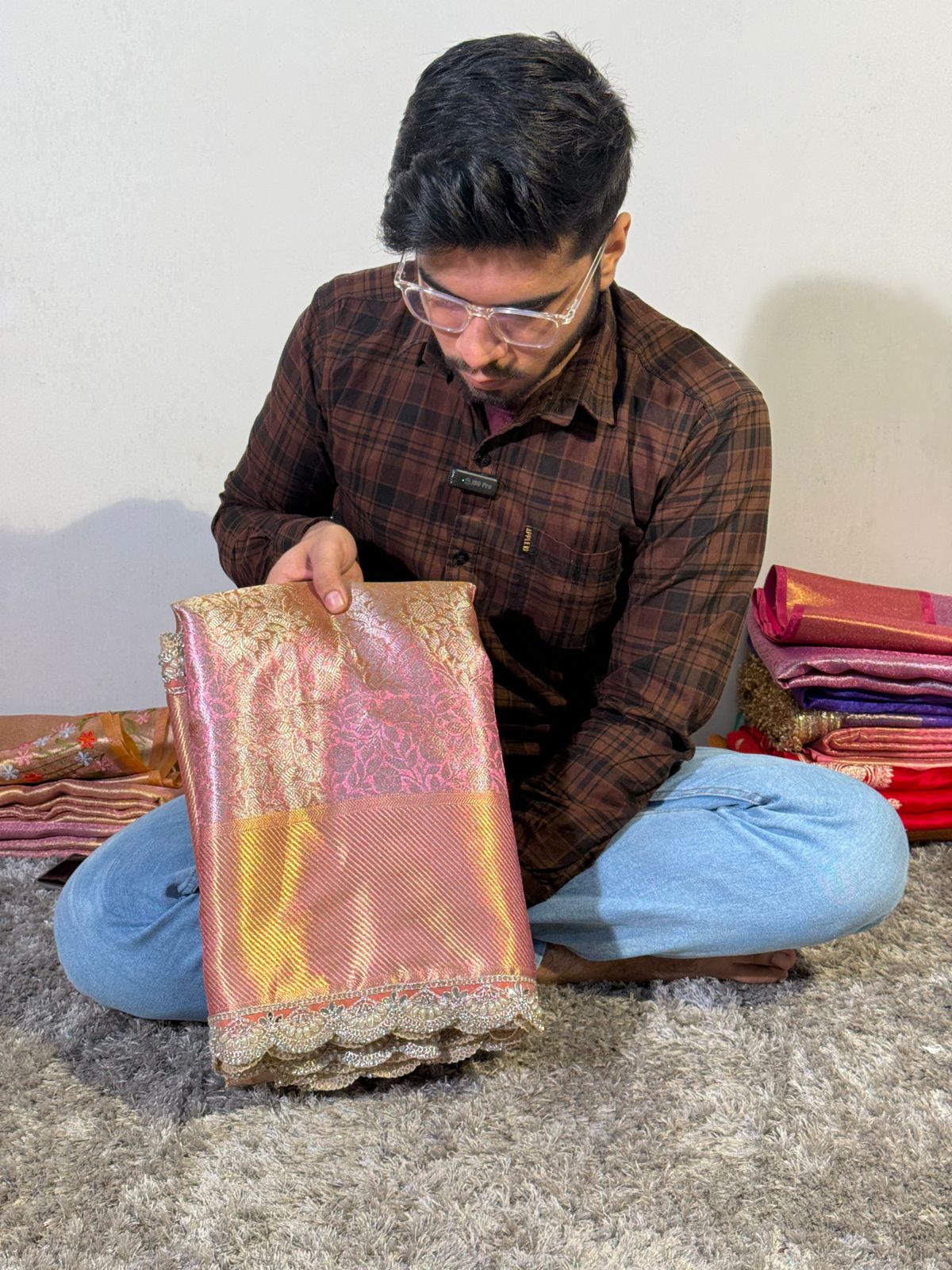
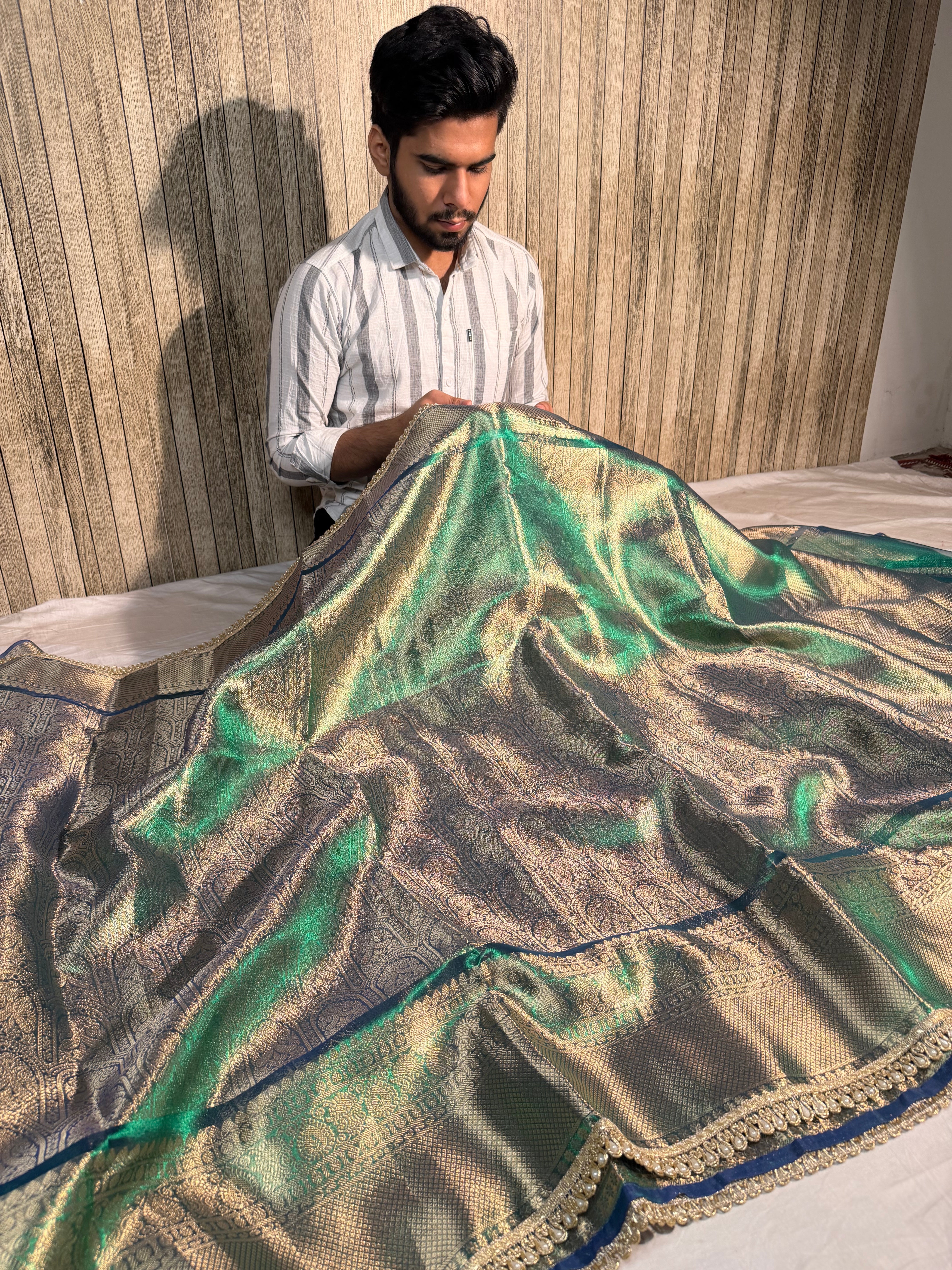
The metallic threads running through the weave catch light in a very specific way. Depending on how you move and where you stand, a tissue silk saree almost seems to change colour slightly. That is the characteristic "shot" quality that tissue is known for. A pink tissue silk saree viewed from one angle can look almost copper. A mustard can shift toward gold. It is this quality that makes tissue silk sarees so compelling in photographs and under evening lighting.
Tissue silk is lighter than many people expect. The metallic threads add visual weight, but not physical weight. This is why a mustard yellow breathable Katan tissue silk Banarasi saree, for instance, can be worn through a long mehendi or afternoon function without the exhaustion that heavier silks sometimes bring.
And What Exactly Is Pure Silk?
Pure silk sarees are woven entirely or predominantly from natural silk threads without the addition of metallic zari in the base fabric itself. The term "pure silk" covers a wide range of weaving traditions: Kanjeevaram, Banarasi, Tussar, Chanderi, Mysore silk, and more. What unites them is the fabric base, natural mulberry silk or regional variants that give the saree its characteristic lustre, weight, and drape.
A pure silk saree has a depth of colour that is genuinely hard to replicate. Because natural silk fibres reflect light differently from metallic threads, the colour you see in a pure silk saree has a richness and warmth that sits in the fabric itself rather than bouncing off it. When a pure silk saree drapes across the shoulder, it falls with a fluidity and weight that feels unmistakably luxurious.
Pure silk sarees also tend to carry more elaborate weave work in the borders and pallu, particularly in Banarasi and Kanjeevaram traditions. The weaving itself becomes the decoration, rather than the shimmer of the base fabric.
The Core Difference: How They Feel, Look, and Behave
This is where the real comparison begins, and where most buying decisions should actually be made.
Drape and Structure
Tissue silk holds its drape with more structure. The metallic threads give the fabric a slight rigidity that means pleats stay crisper and the pallu falls in defined folds rather than flowing ones. For occasions where you want a very "put together" silhouette from the moment you drape to the last hour of the event, tissue silk delivers.
Pure silk drapes with more fluidity. It flows rather than holds. A Kanjeevaram pure silk saree will fall heavily and beautifully, creating soft folds that feel organic rather than architectural. A lighter pure silk like Chanderi will move with the body in a way that tissue simply does not.
Neither is better. They are different. The question is what you want the saree to do.
Luminosity and Visual Impact
Tissue silk has immediate visual impact. The moment you walk into a room, the shimmer stands out immediately. It is a fabric that announces itself, which can be exactly what you want at a wedding reception or an evening function where photographs are being taken constantly.
Pure silk has a deeper, more lasting visual quality. It does not announce itself the same way, but it holds attention differently. A well-woven Kanjeevaram pure silk saree has a gravitas and richness that tissue silk, for all its shimmer, does not quite replicate.
Comfort and Wearability
Tissue silk, despite its shimmer, is lighter and often more breathable than heavyweight pure silks. This makes it a genuinely practical choice for longer events or warmer climates. The Katan tissue silk variant in particular is known for its breathable quality, which is why it keeps showing up as a recommendation for mehendi functions and daytime weddings.
Pure silk sarees, particularly heavier Kanjivaram and Banarasi variants, can feel substantial over a long day. That weight is part of what makes them feel luxurious, but it is also something to factor in when you are deciding what to wear to a six-hour wedding celebration.
Longevity and Care
Both fabric types require care, but in slightly different ways. Pure silk is more forgiving with age. A well-maintained Kanjeevaram pure silk saree can genuinely last decades and become a family heirloom. The natural silk fibres do not deteriorate the way synthetic or metallic threads sometimes do.
Tissue silk requires more attention because of the metallic threads. These threads can oxidise over time, particularly if the saree is not stored correctly. Dry cleaning and muslin storage are both non-negotiable for tissue silk if you want it to hold its appearance over years.
Who Should Choose Tissue Silk?
If you are someone who attends a lot of festive functions, weddings, and evening events, tissue silk should be well represented in your wardrobe. The shimmer travels well across different kinds of celebrations. It photographs beautifully, holds a crisp drape, and feels less heavy than many premium silks, which matters when you are on your feet for hours.
If you are drawn to colour play and the visual interest of a saree that seems to shift in different lights, tissue silk will genuinely excite you. There is something about the way a metallic magenta premium tissue silk Moti lace attached Banarasi saree catches evening light that no other fabric quite replicates. The combination of the metallic base with Moti lace detailing creates a layered visual effect that reads as both traditional and unmistakably contemporary.
Tissue silk is also a strong choice if you are relatively new to wearing sarees and find heavyweight silks difficult to manage. The lighter feel makes draping easier and the day more comfortable.
Who Should Choose Pure Silk?
If you are building a wardrobe that is meant to last, that you want to pass on, that you want to pull out ten years from now and have it still feel as relevant as it does today, pure silk is where that investment belongs.
Pure silk sarees are also the stronger choice for very formal, traditional, or religious occasions where the weight and seriousness of the fabric itself carries meaning. A Kanjeevaram pure silk saree at a traditional South Indian wedding or a heavy Banarasi pure silk saree at a North Indian ceremony is not just appropriate, it is often preferred for traditional ceremonies and cultural celebrations.
If you care deeply about craft and want the weave itself to be the centrepiece of the saree rather than the shimmer of the fabric, pure silk gives the weaver's art its fullest expression. The zari work and brocade patterns in a pure silk Banarasi or Kanjeevaram stand out most clearly against a rich silk base.
Where Both Worlds Meet: The Kanjeevaram Tissue Silk Banarasi
Here is where the conversation gets particularly interesting. Some of the most sought-after sarees right now sit at the intersection of both traditions. They take the luminosity and lightness of tissue silk and pair it with the craftsmanship and heritage of Banarasi or Kanjeevaram weaving.
The Sai Pallavi mam inspired Kanjivaram tissue silk Banarasi saree is a perfect example of this. Sai Pallavi's saree moments have consistently drawn attention because she wears traditional weaves with a naturalness that makes them feel completely current. A Kanjivaram tissue silk Banarasi combination takes the structural elegance of Kanjeevaram craft and the shimmer of tissue, creating something that works across South Indian and North Indian celebratory contexts equally well.
The dual shaded premium Kanjivaram tissue silk Banarasi saree pushes this further. The dual shading, where the fabric shifts between two tones depending on the light and angle, is one of tissue silk's most distinctive qualities, and in a Kanjivaram construction it is elevated to something genuinely striking. Women who have been wearing sarees for decades describe seeing this kind of saree as a reminder of why they love the craft.
The Bollywood Connection and Why It Matters
Whether we acknowledge it or not, Bollywood has always shaped what women want to wear. Not in a passive, follow-the-celebrity way, but in a more nuanced sense: when a well-dressed woman in a film or at a public event wears something beautifully, it gives other women a reference point for imagining themselves in it.
The Janhvi Kapoor inspired pink tissue silk saree has picked up attention for exactly this reason. Janhvi Kapoor's aesthetic is feminine, soft, and deeply rooted in traditional Indian wear without ever feeling costumed. A pink tissue silk saree styled the way she wears it, minimal jewellery, clean drape, hair pulled back, creates a look that feels effortlessly elegant rather than overdressed.
The metallic Rani pink premium breathable tissue silk Banarasi saree takes that same energy into a more richly woven direction. Rani pink as a colour has incredible staying power in Indian fashion. It is bold enough to be festive but soft enough to be approachable. In a breathable tissue silk Banarasi construction, it hits that sweet spot between dressed up and comfortable that women who attend multiple events in a week genuinely need.
Styling Each Fabric Type Right
Styling Tissue Silk Sarees
Tissue silk does a lot of visual work on its own. The shimmer means you do not need to load on jewellery to create an impact. A pair of statement earrings and a clean blouse is often enough. In fact, over-accessorising a tissue silk saree can make the overall look feel cluttered rather than rich.
Blouse choices for tissue silk sarees should echo either the metallic quality of the fabric or contrast cleanly against it. A gold or silver tissue blouse in a complementary shade works beautifully. So does a deep velvet or raw silk blouse in a contrasting colour if you want the saree to feel a little less formal. If you are styling a Sai Pallavi Mam-inspired Kanjivaram Tissue Silk Banarasi Saree, a deep jewel-toned raw silk blouse in bottle green or navy works particularly well, it grounds the shimmer of the tissue without competing with the Kanjivaram weave, and the overall look carries that same effortless elegance that makes her saree moments so memorable.
Styling Pure Silk Sarees
Pure silk sarees invite heavier jewellery and more elaborate styling. A Kanjeevaram pure silk almost demands temple jewellery or antique gold. A Banarasi pure silk pairs naturally with kundan or polki. The richness of the fabric is a foundation that heavier pieces can lean against without overwhelming.
Blouse choices for pure silk sarees can be more adventurous because the saree itself is the anchor. A contrast blouse with interesting embroidery or a structured sleeveless cut can add modernity to a traditional weave without any conflict.
A Note on Investment Value
This comes up in every serious saree conversation and it should be addressed directly.
Pure silk sarees, particularly Kanjeevaram and Banarasi weaves with genuine zari, are often viewed as long-term wardrobe investments because of their craftsmanship and longevity. A well-made pure silk Banarasi purchased today can remain relevant and wearable for decades when cared for properly. Many families preserve pure silk sarees across generations because of their craftsmanship, cultural significance, and enduring appeal. These sarees are bought, worn, treasured, and passed down. The craft that goes into them is irreplaceable, and the market reflects that.
Tissue silk sarees occupy a different position. They are not cheap by any measure, particularly premium tissue silk Banarasi weaves with genuine metallic threads. But their value proposition is more about wearability and contemporary appeal than heritage investment. You buy a tissue silk saree because you want to wear it and love wearing it. You buy a pure silk saree for all of that, and for what it represents.
Both are worthwhile. They just represent different relationships with the garment.
How to Verify What You Are Actually Buying
This matters, especially when shopping online.
For pure silk, checking for Silk Mark certification remains one of the most reliable ways to verify authenticity. Genuine silk also has a natural sheen, smooth texture, and characteristic drape that differs from synthetic alternatives. When making a significant purchase, always review fabric specifications and seller documentation carefully.
For tissue silk, the metallic threads should have a warm, slightly oxidised quality if they are genuine zari. Machine-made metallic threads look more uniform and harsher under close inspection. At Surreal Store, fabric and weave details are clearly documented so you can make an informed decision without guesswork.
Both Belong in Your Wardrobe
If you have been reading this hoping for a definitive verdict, here it is: you do not have to choose.
A wardrobe built around both tissue silk and pure silk sarees is a complete wardrobe. Use tissue silk for the events that want shimmer, lightness, and contemporary energy. Reach for pure silk when the occasion calls for heritage, weight, and the kind of richness that only years of craft tradition can produce.
We covered some of the most beautiful tissue silk options available right now in our earlier piece, 10 Stunning Banarasi Tissue Silk Sarees to Add to Your Wardrobe Right Now, which is worth reading alongside this if you are actively building your collection. That piece gets into specific recommendations; this one gives you the framework to decide what actually fits your life.
Use both guides together and you will walk into any saree purchase knowing exactly what you are looking for and why.
FAQs
Which Saree Is Better for Weddings?
For daytime weddings and contemporary celebrations, tissue silk sarees offer comfort and visual appeal. For traditional wedding ceremonies, many women still prefer pure silk sarees because of their rich drape and heritage value.
Is Tissue Silk More Comfortable Than Pure Silk?
In many cases, yes. Tissue silk sarees are often lighter and easier to manage during long events. However, comfort also depends on the weave, climate, and individual preference.
Can You Wear Tissue Silk to a Traditional Function?
Absolutely. Modern tissue silk Banarasi and Kanjivaram-inspired sarees balance traditional craftsmanship with contemporary styling, making them suitable for many festive and cultural occasions.
Final Thought
The tissue silk versus pure silk question is really a question about what kind of occasion you are dressing for and what relationship you want with the garment. Neither fabric is superior. Both are deeply rooted in Indian craft traditions. Both, when chosen well and worn with intention, are extraordinary.
If you are looking for a place that understands both traditions with equal depth, The Surreal Store brings together tissue silk and pure silk sarees that are sourced and curated with genuine attention to craft. Shop thoughtfully. Know your fabric. And wear whatever you choose like you mean it.